
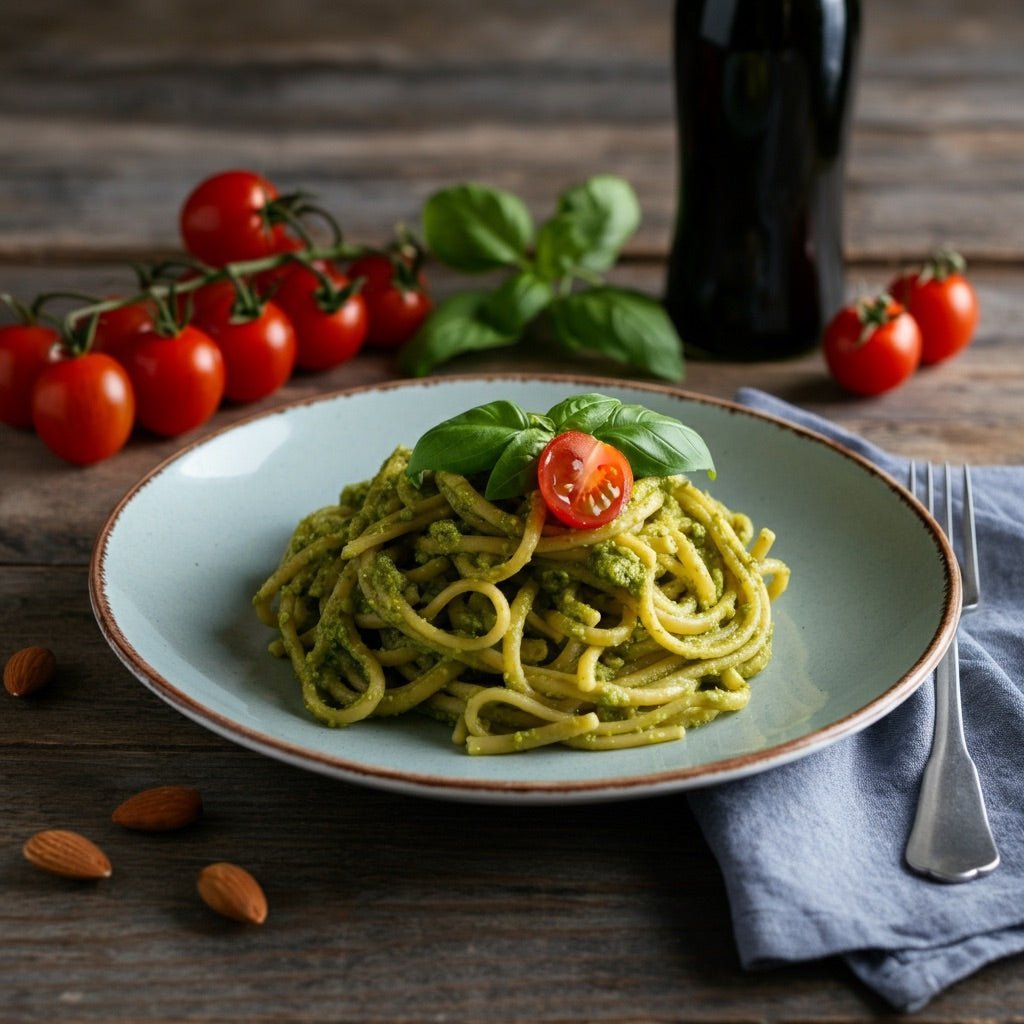
How to make Trapani-style almond pesto at home
The Trapani-style pesto, also called Sicilian pesto, is one of the island's simplest and most aromatic recipes. Originating in Trapani, it combines basil, ripe tomatoes, almonds, garlic and extra virgin olive oil. This fresh, quick sauce is ideal for pasta, especially rough shapes that hold the sauce well.
Unlike Genoese pesto, Trapani-style pesto uses almonds instead of pine nuts, reflecting their importance in Sicilian cuisine. The result is a creamy yet light sauce with an aromatic Mediterranean flavour and a hint of sweetness from the tomatoes.
At a glance: Trapani-style pesto is a Sicilian sauce made with tomatoes, almonds, basil, garlic and extra virgin olive oil. It is usually served with busiate, casarecce, fusilli and paccheri, but is also excellent on toast, grilled vegetables and cold pasta dishes.
Looking for a ready-made option? Explore Sicilus's selection of artisan sauces and Sicilian pestos or pair it with our artisan Sicilian pasta.

The history of Trapani-style pesto
Trapani-style pesto takes its name from Trapani in western Sicily. According to tradition, it arose when Ligurian sailors brought basil pesto to the port and local cooks adapted it to available ingredients.
Almonds, more common in Sicily, replaced pine nuts. Ripe tomatoes joined the basil, creating a softer, pink sauce well suited to Sicilian pasta.
Ingredients for Trapani-style pesto
You only need a few ingredients to make Trapani-style pesto. Quality makes the difference.
- Ripe tomatoes: add sweetness and creaminess.
- Almonds: replace pine nuts and give the sauce body.
- Fresh basil: adds aroma and freshness.
- Garlic: use carefully so it does not overpower the other flavours.
- Extra virgin olive oil: brings the ingredients together and gives the pesto a smooth texture.
- Pecorino or Parmigiano: optional, but adds a savoury note.
- Salt and pepper: balance the flavour.
| Ingredient | Role in the recipe |
|---|---|
| Ripe tomatoes | Make the pesto sweet, fresh and slightly pink. |
| Sicilian almonds | Replace pine nuts and give the sauce body. |
| Basil | Adds the herbal aroma typical of Mediterranean pesto. |
| Extra virgin olive oil | Binds the ingredients and makes the sauce smooth. |
Trapani-style pesto recipe
Ingredients for 4 people
- 320 g pasta, preferably busiate, casarecce or fusilli
- 300 g ripe tomatoes
- 50 g blanched almonds
- 1 small garlic clove
- 1 bunch of fresh basil
- 50 ml extra virgin olive oil
- 30 g grated pecorino or Parmigiano, optional
- salt to taste
- black pepper to taste
Method
- Blanch the tomatoes for about 30 seconds, then remove the skins and seeds.
- Lightly toast the almonds in a frying pan and leave to cool.
- Blend or crush the almonds with garlic and a pinch of salt.
- Add the tomatoes, basil and extra virgin olive oil.
- Add the cheese if using, and adjust the salt and pepper.
- Toss with freshly drained pasta, adding a little cooking water to make the pesto creamier.
Trapani-style pesto should not be cooked. Use it raw to retain its freshness, aroma and colour.
Want to make a simple, aromatic Sicilian pasta dish?
Pair Sicilian almond pesto with rough, bronze-die pasta.
Where to buy Sicilian pesto and pasta to pair with it
Sicilus offers a selection of artisan ready-made sauces and Sicilian pestos for simple recipes full of Mediterranean character. For a complete pasta dish, pair pesto with artisan Sicilian pasta with a rough, porous surface.
- Sicilian pesto with basil, ricotta and almonds: creamy, delicate and ready to use.
- Sicilian pistachio pesto: a richer gourmet option.
- Pasta, sauces and pestos: the full collection for creating a Sicilian pasta dish.
Which pasta to use with Trapani-style pesto
The traditional pasta for Trapani-style pesto is busiate, a shape typical of the Trapani area. Short, rough shapes that hold the sauce also work very well.
Suitable shapes include:
- casarecce;
- fusilli;
- rigatoni;
- paccheri;
- penne rigate.

Complete the recipe with Sicilian pasta.
Russello ancient-grain paccheri hold the sauce well and bring out the flavour of Sicilian pesto.
Tips and variations
Trapani-style pesto is a simple recipe that can be adapted to your taste.
- For a more intense flavour, add a few sun-dried tomatoes.
- For a milder version, use less garlic or leave it out.
- For a more rustic texture, use a pestle and mortar instead of a blender.
- For a creamier version, add a little fresh ricotta.
- For a vegan version, omit the cheese.
Trapani-style pesto or pistachio pesto?
Both are Sicilian sauces, but with different characters. Trapani-style pesto is fresher and more Mediterranean, thanks to tomatoes, basil and almonds. Pistachio pesto is richer, creamier and more intense, ideal for gourmet pasta dishes, bruschetta and pairings with sausage, speck or prawns.

Prefer a creamier sauce?
Pistachio pesto is ideal for pasta, bruschetta and gourmet recipes.
How to serve Trapani-style pesto
As well as pasta, you can use it:
- on toasted bread;
- with grilled vegetables;
- as a cold sauce for fish or white meat;
- in a summer pasta salad;
- as a base for Mediterranean bruschetta.
Frequently asked questions
What is the difference between Trapani-style and Genoese pesto?
Trapani-style pesto uses almonds and tomatoes, while Genoese pesto uses basil, pine nuts, garlic, cheese and oil. Trapani-style pesto has a more Mediterranean flavour and a softer texture.
Which pasta goes with Trapani-style pesto?
Traditionally busiate, but it also works well with casarecce, fusilli, rigatoni and paccheri.
Should Trapani-style pesto be cooked?
No. Use it raw, adding just a little pasta cooking water if needed to make it creamier.
Can it be made without cheese?
Yes. The cheese-free version is lighter and suitable for a vegan diet.
Where can I buy ready-made Sicilian pesto?
Sicilus offers artisan Sicilian pestos and sauces ready to pair with rough Sicilian pasta, toast, bruschetta and Mediterranean recipes.