Brioche with Tuppo: The Secret of Sicilian Breakfast
brioche col tuppo
Brioche con il tuppo: the fluffy secret of Sicilian breakfast!
May 15, 2026
brioche col tuppo

Brioche Col Tuppo: The Soft Secret to Sicilian Breakfast!

Introduction to Brioche with a Tuppo

The brioche with the tuppo It is the emblem of the Sicilian breakfast, a dessert whose intoxicating fragrance and velvety consistency have conquered palates well beyond the borders of the island. brioche with a tuft It is a pride of the island of Sicily and a delight of local pastry making, beloved and recognized as a symbol of regional excellence. This soft pastry masterpiece is more than just a dessert, but a true cultural symbol embodying centuries of Mediterranean gastronomic tradition. The deliciousness of the brioche is best appreciated in Sicilian cafés, where it is enjoyed for breakfast or as a snack, offering an authentic and quintessential island experience.

Origin and Tradition

The roots of the brioche con il tuppo are deeply rooted in Sicilian culinary history, intertwined with Arab, Spanish, and French influences that have shaped the island's gastronomy. Its name derives from the characteristic protuberance on top, the "tuppo," which in Sicilian dialect also refers to the chignon, a traditional female hairstyle. The name "brioche col tuppo" comes from this distinctive shape, a symbol of Sicilian tradition, and represents a direct link between the dessert and local culture.

Historically, this leavened delicacy began to spread in the 18th century, when French pastry techniques fused with local ingredients and methods. Sicily, a crossroads of Mediterranean cultures, has reinterpreted the French brioche, giving it a distinctive identity through its iconic tufted shape and the use of select local ingredients.

Characteristics of the Brioche with the Tuppo

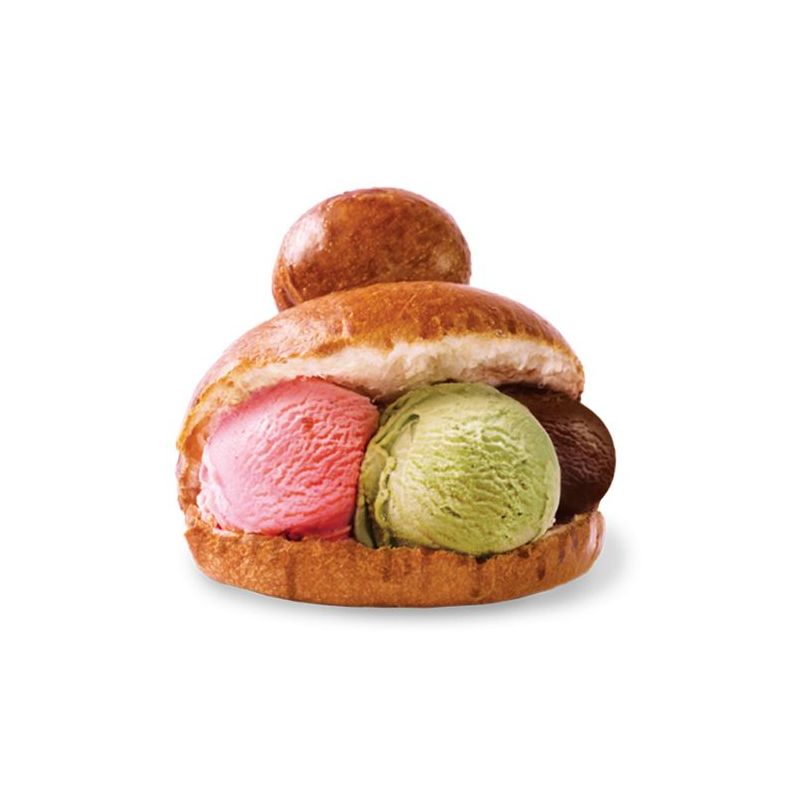
What distinguishes the brioche con il tuppo from other similar preparations is its unmistakable structure: a soft, round base topped with a small dome (the tuppo, as it is known). This shape is not only aesthetically pleasing, but also serves specific functional purposes: the tuppo is the ideal starting point for enjoying the brioche, especially when used as a container for ice cream or granita. The brioche con il tuppo is also a delicious snack, especially in the small version, ideal for children who want a tasty and wholesome afternoon treat.

The internal texture reveals irregular cavities that testify to good leavening, while the exterior features a golden amber hue and a glossy sheen, the result of expertly brushing the egg before baking. On the palate, it stands out for its extreme softness accompanied by buttery notes and a delicate vanilla aroma that lingers as an unmistakable organoleptic signature.

At Sicilus, we understand the importance of preserving the authenticity of this tradition. Our brioche col tuppo is prepared using artisanal methods that respect the historic Sicilian recipe.

Brioche col tuppo is more than a dessert: it's a sensory experience that expresses Sicily through its aromas, textures, and flavors. For those who want to bring the authentic flavor of a Sicilian breakfast to their table, we've carefully selected a version that embodies the essence of this tradition.

Natural Ingredients

The deliciousness of brioche col tuppo depends largely on the choice of ingredients. Each component contributes decisively to the final result, creating the harmony of flavors and inimitable texture that characterizes this baked good.

Flour and Yeast: The Perfect Base

The foundation of an excellent brioche col tuppo is flour. Traditionally, type "00" flour is preferred, with a medium-high protein content (around 12-13%), which provides the necessary structure to support the internal cavities. Some pastry chefs use a mix that includes percentages of Manitoba flour, particularly rich in gluten, to give the dough greater elasticity.

As for yeast, the debate between purists and innovators remains open. The oldest Sicilian tradition favors the use of sourdough (or mother yeast), which imparts aromatic complexity and superior digestibility. Contemporary versions may include fresh brewer's yeast, which accelerates the leavening process while maintaining remarkable results. In some traditional recipes, adding lard to the dough is essential for an even softer, more fragrant, and more authentic brioche, in keeping with the historical practice widespread in many areas of Sicily. The balance between production time and depth of flavor often determines the choice between the two options.

The Secret of Quality Butter

Butter is the ingredient that more than any other defines the organoleptic character of brioche con il tuppo. It's not just a simple fat, but a fundamental structural and aromatic element. Sicilian tradition calls for butter with a high fat content (82-84%), preferably Italian and made from milk from pasture-fed cows.

"Butter gives the brioche con il tuppo not only softness, but that ineffable sensation of melting fullness that lingers on the palate after every bite. It is the invisible signature of every authentic brioche." - An ancient saying of Sicilian pastry chefs

The temperature at which the butter is processed is crucial: it must be soft enough to incorporate into the dough evenly, but not melted, to preserve the structure that will ensure the final softness.

Fresh Eggs and Their Role

The eggs in the brioche col tuppo dough serve many functions: they enhance the flavor, add color, contribute to the structure, and act as emulsifiers. Sicilian tradition favors the freshest free-range eggs, with rich yolks that yield a golden yellow dough.

The ratio of egg yolks to whole eggs is one of the secrets guarded by master pastry chefs: more egg yolks increases the richness and softness of the dough, while whole eggs increases its structure and alveolation.

Other complementary but essential ingredients include finely ground granulated sugar, which also sweetens and retains moisture; salt, which balances the sweetness and strengthens the gluten structure; and vanilla or citrus zest flavors, which add distinctive notes without overpowering the overall flavor profile.

The Temperature of the Ingredients

An often overlooked detail in making brioche col tuppo is the temperature of the ingredients. Bringing eggs, butter, milk, and yeast to room temperature isn't just a pastry chef's whim, but a golden rule that guarantees a successful dough.

Ingredients that are too cold risk inhibiting the yeast's activation, hindering fermentation and the dough's soft, harmonious rise. Room temperature butter blends perfectly without forming lumps, and warm eggs contribute to a more even and silky texture.

This trick ensures more uniform processing and optimal leavening, giving the brioche its unmistakable lightness. Just 30 minutes out of the refrigerator is enough to transform a simple recipe into a true pastry ritual.

Procedure for a Perfect Brioche

The mastery in creating brioche col tuppo lies not only in the quality of the ingredients, but also in the methodical execution of refined techniques passed down from generation to generation. It's a process that requires patience, precision, and a deep understanding of the reactions that occur in the dough.

Preparing the Dough

The process begins with yeast activation, a crucial preliminary step to ensure proper fermentation. This is followed by the actual kneading, which requires method and careful attention to temperature. The ingredients are incorporated in a predetermined order: first the liquid ingredients (eggs, warm milk), then the dry ingredients (flour, sugar, salt), and finally the softened butter. Mixing is ideally done with a professional mixer with a dough hook, although purists maintain that the warmth of the hands imparts superior organoleptic characteristics. The dough is kneaded until it reaches a "veil consistency," that is, when stretching a small portion of it creates a thin membrane that doesn't break immediately. This consistency check should be repeated at least twice during kneading to ensure the dough is well-developed.

Once ready, the dough is divided into pieces of uniform size which can then be shaped to form brioche.

A key technical indicator is the final dough temperature, which should be around 26-28°C to ensure optimal leavening conditions. This parameter, often overlooked by non-professionals, is one of the distinguishing features between a mediocre and an excellent result.

Sicilian brioche panzotta with sweet filling, sicilus

The Art of Slow Rising in the Refrigerator

One of the most overlooked, yet crucial, steps in making brioche col tuppo is the slow leavening in the refrigerator. After the dough has initially risen, the prolonged resting at low temperatures—usually about 20 hours—isn't just a technical detail, but a true refinement.

What happens in this “night” interval?

Low temperatures slow the yeast's activity, promoting a controlled fermentation that allows the complex aromas to develop with balance and depth. It is during this time that the brioche acquires its inimitable softness, the fine and regular texture of the crumb, along with a richer and more persistent aroma. In practice, the long cold maturation transforms a good dough into a breadmaking masterpiece, like the secrets that make a Parisian pain au lait or an artisanal panettone unforgettable.

Even from a practical point of view, this technique makes the work easier: a well-ripened dough is more manageable during portioning and shaping, reducing the risk of collapses or irregularities during cooking.

The result? A brioche col tuppo that stands out for its lightness and fluffiness, but also for the aromatic complexity that only time—and patience—can provide.

Rising Time and the Secrets to a Soft Texture

The rising process for brioche col tuppo involves several phases, each with its own specific purpose. The first rising phase occurs as a whole, with the dough gathered into a ball and covered with plastic wrap to prevent a crust from forming. This process takes 2 to 3 hours in a temperature-controlled environment (about 28°C).

This is followed by a "punching down" phase, in which the dough is briefly kneaded to expel excess carbon dioxide and redistribute the yeast. This seemingly brutal operation is actually essential to achieving regular air bubbles and a homogeneous structure. Patience is the pastry chef's cardinal virtue at this stage: rushing the rising time would result in a heavy, underdeveloped brioche. As an old Sicilian adage goes: "Brioche has its time, like the seasons and love."

Leavening Methods and Times: Resting and Maturation of the Dough

Once kneaded, the dough is formed into a smooth ball and placed in a large, lightly greased bowl. The surface is covered with plastic wrap to prevent it from drying out. It then begins a first rising process at room temperature or in a turned-off oven with the light on, for about 2 hours, until the dough has visibly increased in volume and the gluten has become elastic.

Once this initial leavening is complete, the dough is left to mature in the refrigerator: the dough, still covered, rests in a cold place for at least 18-20 hours. This step, borrowed from the best practices of the great European baking schools, such as the French, is essential for developing more complex aromas and ensuring the proverbial softness of the inside.

After refrigeration, the dough is gently brought back to room temperature and left to rest for an hour, or until soft and workable again. This double leavening—first at a controlled temperature, then a long cold maturation—allows for a fine, silky internal texture, as well as a uniform, regular shape, ready for the subsequent shaping of the tuppo.

Tuppo Shaping: Techniques and Tips

Creating the characteristic tuppo represents the moment where technique and art converge. After dividing the dough into balls of uniform weight (about 60-70g for each individual brioche), the process begins: using the palm of your hand, create a hollow in the center of each ball. Then, take a small amount of dough, round it, and place it in the hollow, pressing lightly to ensure it adheres.

Phase

Technique

Expected result

Portioning

Precise cutting of dough into 60-70g units

Brioche of uniform size

Pirlatura

Rotate the dough on the surface with a circular motion

Smooth and taut surface

Forming the tuppo

Take about 1/5 of the dough, round it and place it

Well-defined central protuberance

A trick used by pastry chefs is to slightly moisten their fingers with water while shaping the tuppo, to prevent the dough from sticking to their hands and thus ensure a smooth and even surface.

Preparing brioche with tuppo

Cooking: Ideal Temperatures and Times

The final stage requires just as much attention and precision. Before baking, the shaped brioche undergoes a final rising period of about 30-40 minutes, followed by brushing on a mixture of egg yolk and milk (browning), which gives it its characteristic amber sheen.

To prevent the brioche from sticking and for easier cleanup, we recommend lining the baking sheet with parchment paper before placing the brioche in the oven. Baking is ideally done in a preheated static oven at 180-190°C (350-375°F) for about 12-15 minutes, enough time to ensure the inside is cooked through without excessively drying out the dough. A simple but effective test to check if the brioche is done is to tap lightly on the bottom of the brioche: a sharp sound indicates it's ready.

Cooling on a rack is essential to avoid condensation forming on the bottom, which would compromise the crispy texture of the base.

Variants and Combinations

In Sicily, brioche with a tuft is also known as 'brioscia', a term that recalls local tradition and the many variations of this specialty.

The brioche with the tuppo, while maintaining its unmistakable identity, lends itself to numerous interpretations and ways of enjoying it, which vary according to local traditions and personal tastes.

Regional Versions and Differences

Within Sicily itself, the brioche with tuppo has noteworthy regional variations. In fact, it is Sicilian brioche really delicious, also known to many as Messina brioche with tuft because they are particularly widespread in the Messina and Catania areas, but in reality throughout Sicily they are a true symbol of this land and can be found everywhere.

The Catania version tends to be sweeter and flavored with orange honey or orange blossom essence, while the Palermo version is more neutral in flavor, ideal for savory or sweet accompaniments.

In the Messina area, you can find the brioche "cunzata" (seasoned), enriched with granulated sugar and sesame seeds on the surface, while in the Ragusa area the traditional recipe includes a light hint of cinnamon in the dough. Some innovative pastry shops have created variations that include non-traditional ingredients such as saffron, Bronte pistachio or Modica chocolate in the dough, creating interesting fusions that nevertheless respect the original structure and technique.

How to Eat Brioche with a Tuppo

The versatility of the brioche con il tuppo is fully expressed in its many ways of enjoying it. Sicilian tradition offers several tasting options:

  • Pure, slightly heated, to appreciate its softness and delicate buttery flavour

  • Stuffed with ricotta cream or custard, for a hearty breakfast

  • Cut in half and filled with ham and cheese, according to the Sicilian "tavola calda" tradition

  • Dipped in milk or coffee, a common practice in Sicilian families

In any case, the brioche con il tuppo is at its best in the first 24 hours after production, when its fragrance and softness reach their peak.

Perfect Pairings: Gelato, Granita, and More

The most iconic and beloved pairing is with Sicilian granita, especially the coffee or almond version. This combination is the quintessential summer breakfast in Sicily: the tuppo is often removed first and used to collect the semi-melted granita, while the body of the brioche is gradually dipped into the frozen dessert.

Equally popular is the pairing with artisanal gelato, where the brioche serves as an edible container. This tradition transforms simple gelato into a complete meal, especially popular on hot Sicilian days. The soft crumb slowly absorbs the melting gelato, creating a layered taste experience that alternates temperatures and consistencies.

Less known but equally delicious are the combinations with:

  • Spreadable pistachio cream, which enhances the contrast between the softness of the brioche and the density of the cream

  • Sicilian black bee honey and fresh ricotta, a return to the island's rural origins.

  • Sicilian citrus jams, which balance the sweetness of the paste with refreshing acidic notes

A unique yet surprisingly harmonious pairing is with a glass of Malvasia delle Lipari, a sweet wine whose amber notes reflect the tones of freshly baked brioche, creating a tasting experience of rare elegance.

Sicilian brioche with granita


FAQ about Brioche with a Tuppo


The most frequently asked questions about brioche con il tuppo reveal the curiosity and interest this baked good continues to inspire, even beyond Sicily's borders. Here are the answers to the most common queries.

  • What is the history of the brioche with a tuft?

The brioche con il tuppo has origins intertwined with the history of European pastry making. Although the basic technique derives from French pastry making, imported to Sicily during the Bourbon period (18th-19th centuries), its distinctive shape with the tuppo represents a uniquely Sicilian innovation.

A popular legend holds that the shape was inspired by the traditional Sicilian women's hairstyle, the "chignon" or "tuppo," which women wore gathered on top of their heads. Other scholars maintain that the protuberance had a functional purpose: to facilitate grip during processing and cooking.

What is certain is that from the mid-nineteenth century the brioche with tuppo began to spread throughout the island, quickly becoming a symbol of the Sicilian breakfast and over time acquiring regional variations that enriched its taste panorama.

  • Tips for Storing Brioche with a Tuppo

Storing brioche con il tuppo optimally is a challenge, as its rich butter and egg content makes it particularly susceptible to oxidation and rancidity. Here are some tips for best preserving its quality:

  • Store at room temperature (18-22°C) in an airtight container or wrapped in a clean cloth for the first 24-36 hours.

  • Avoid direct refrigeration, which would accelerate the staling process.

  • For longer storage, freeze the brioches as soon as they have cooled, wrapping them individually in cling film and then in an airtight bag.

  • To regenerate a cooled brioche, heat it in the oven at 180°C for 3-4 minutes or, alternatively, a few seconds in the microwave at medium power.

In recent years, the packaging of brioche with a tuppo has made great strides thanks to the use of modern techniques such as hermetic packaging or freshness-preserving capsules in ATM (modified atmosphere packaging). This type of packaging allows the product to retain its freshness and fragrance longer, extending its shelf life and ensuring superior quality even during transport. Choosing the right packaging is essential to preserving the brioche's original characteristics and offering consumers a consistently fragrant product.

One particular precaution concerns any filling: this should be added only at the moment of consumption to prevent the moisture from the filling from penetrating the dough, compromising its consistency.

  • Extra Tip: How to Serve It Best

Once baked, let the brioche cool for about ten minutes before eating. This simple step allows the crumb to soften thoroughly, restoring all the fragrance and softness typical of freshly baked brioche. If you'd like even softer brioche, you can cover them with a clean cloth while they cool.

The Secret to Excellent Results

Remember that the real key to making exceptional brioche con il tuppo lies in the original recipe and the long leavening process. Take the time to respect the dough's resting times: only then will you be able to savor all the delicacy and authentic aroma of Sicilian tradition.

  • How to Customize the Recipe at Home

Making brioche with a tuppo at home allows for customizations that, while respecting the basic structure, allow you to adapt the product to your personal tastes. Here are some possible variations:

For a more flavorful dough, you can opt to add:

  • Grated zest of Sicilian citrus fruits (orange, lemon, or late Ciaculli mandarin)

  • Bourbon vanilla pod, more intense than the extract

  • A teaspoon of orange blossom water or acacia honey

For alternative textures:

  • Replace part of the butter with extra virgin olive oil (max 20%) for a softer and lighter brioche

  • Incorporate a small percentage of wholemeal flour (10-15%) for rustic notes

  • Use almond milk instead of cow's milk for a more distinctive, Mediterranean flavor.

The important thing is to maintain the fundamental proportions between wet and dry ingredients and respect the leavening times, the real secret of this baked product.

A Little Trick for the Final Stage

Once baked, let your brioche con il tuppo cool for about ten minutes before enjoying them: this will further soften them, developing their typical fragrance and delicacy. A simple but essential tip is to cover them with a clean tea towel during this stage: the retained moisture helps create an even softer crumb.

The Secret? Time and Care

To make truly exceptional brioche con il tuppo, don't rush: the original recipe and a long leavening are key. Only then will complex aromas and a melt-in-the-mouth texture develop, just like in the finest Sicilian pastry shops.

Conclusion

A journey through the history, ingredients, and techniques of brioche con il tuppo reveals a product of extraordinary complexity, a symbol not only of Sicilian pastry tradition but also a true cultural identity.

The Timeless Charm of the Sicilian Brioche

What makes the brioche con il tuppo a cross-section of culinary traditions is its ability to evoke universal sensations: the pleasure of comfort food, childhood nostalgia, the immediacy of gustatory joy. Its soft texture, delicately crumbling under the teeth, represents a promise of pleasure that transcends generations and geographical boundaries.

The international success of this product in recent years demonstrates how, in the era of food globalization, foods with a strong territorial identity and an authentic history emerge as reference points for consumers increasingly seeking genuine and meaningful taste experiences.

The brioche con il tuppo perfectly embodies this trend: an artisanal product that, despite its apparent simplicity, requires mastery, select ingredients, and respect for time-honored procedures. A hidden complexity that translates into an immediate and satisfying taste experience.

Invitation to Discover and Prepare Brioche with a Tuppo

Whether you're an expert pastry chef looking to try your hand at a Mediterranean classic, or simply a foodie looking to explore new flavor horizons, brioche con il tuppo deserves a place of honor in your gastronomic repertoire.

Making this leavened cake at home means embarking on a journey of patience and precision, but also filling your home with the scent of butter and vanilla that announces, like an invisible call, the promise of a moment of pure joy.

For those who prefer to rely on the expertise of specialized artisans, Sicilus's brioches with tuppo are an opportunity to bring the authentic flavor of Sicilian tradition to your table, crafted with select ingredients and techniques that respect the island's gastronomic heritage.

In an increasingly fast-paced world, taking the time to savor a brioche con il tuppo, perhaps accompanied by a granita on a warm summer morning, means reconnecting not only with a centuries-old tradition, but also with the fundamental pleasure of sharing and conviviality that represents the very essence of Mediterranean culture.

RELATED ARTICLES