Sicilian cannoli shells: how to make them and keep them crisp
The Sicilian cannoli shells are the most delicate part of a cannolo: they should be thin, fragrant, dry and strong enough to hold the filling without breaking. A good shell makes the difference between an ordinary cannolo and a truly Sicilian one.
This guide includes the traditional shell recipe, tips for keeping them crisp, mistakes to avoid and practical advice on sizes for home use, buffets, cafés, bakeries and ice cream shops.

What are cannoli shells?
A cannolo shell is a casing of fried dough, traditionally wrapped around a metal tube and then filled with ricotta cream. Its defining feature is the contrast: the outside should be crisp, while the filling should be soft and creamy.
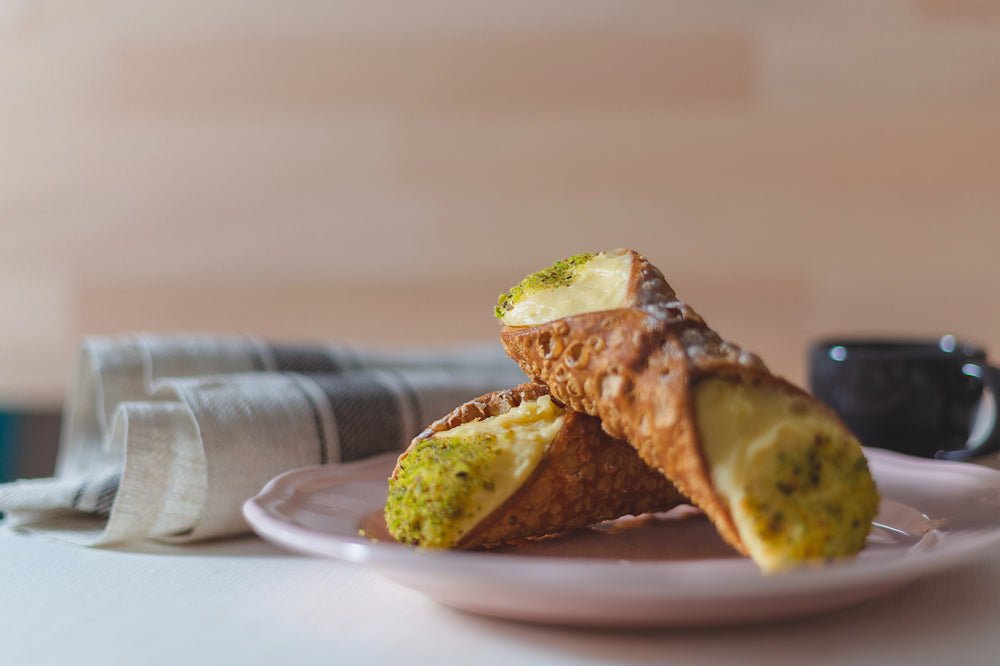
The best shells have a slightly uneven surface, small bubbles from frying, a golden amber colour and a delicate aroma of Marsala, cocoa and fried pastry. They should not be greasy, soft or too thick.
Ingredients for Sicilian cannoli shells
You only need a few ingredients to make shells at home, but they must be handled carefully.
- 250 g type 00 flour
- 30 g sugar
- 30 g lard or butter
- 1 egg
- 50 ml dry Marsala
- 1 teaspoon unsweetened cocoa
- 1 pinch of salt
- oil or lard for frying
Marsala adds aroma to the dough and helps bubbles form during frying. The cocoa is not there to sweeten the shell, but to add colour and a deeper flavour.
Sicilian cannoli shell recipe
1. Prepare the dough
Sift flour and cocoa into a bowl. Add sugar, salt, lard or butter, egg and Marsala. Knead until smooth, firm and not sticky.
Wrap the dough in cling film and leave it in the refrigerator for at least an hour. Resting is essential: it makes the pastry more elastic and easier to roll out.
2. Roll the pastry thinly
Roll the dough on a floured surface to about 1–2 mm thick. A shell that is too thick will feel heavy; one that is too thin may break during frying or filling.
3. Shape the shells
Cut out discs or ovals of pastry, wrap them around cannoli tubes and seal the edges well with a little egg white or water. The seam must hold firmly, otherwise the shell will open in the oil.
4. Fry at the right temperature
Fry the shells in hot oil at about 170–180°C until golden and crisp. Drain on kitchen paper and remove the tubes only when the shells are cool enough not to break.

How to keep cannoli shells crisp
Moisture is the shells’ main enemy. Even a perfect shell can become soft if stored incorrectly or filled too early.
- Store empty shells in an airtight container.
- Keep them in a cool, dry place, away from steam and moisture.
- Do not refrigerate them: they would absorb moisture.
- Fill them shortly before eating.
- For a buffet, fill small batches at a time.
For cafés, catering and bakeries, ready-made, well-packaged professional shells provide more consistent results and reduce the risk of breakage.
Which size should you choose: mignon, standard, large or maxi?
Choose the shell size according to the occasion. There is no single best size: it depends on the type of service.
- Super mignon: ideal for tastings, buffets, events and catering.
- Mignon: perfect for bakeries, sweet aperitifs and after a meal.
- Standard: the classic bakery size, balanced and versatile.
- Large: for a more generous, striking cannolo.
- Maxi: designed for displays, parties and more spectacular serving.
Want to prepare Sicilian cannoli without frying the shells?
Sicilus offers Sicilian cannoli shells in different sizes, ready to fill with fresh ricotta.
Recommended cannoli shells
For home cooks and professionals, ready-made shells are the most practical solution. They save time, reduce breakage and maintain consistent quality.

Classic size for Sicilian cannoli.
The standard pack of 100 pieces suits homes, events and small businesses preparing traditional cannoli.

For buffets and professional service.
The mignon size provides elegant portions that are easy to serve, making it ideal for hospitality businesses too.
How to fill cannoli without softening the shell
Ricotta cream contains moisture, so add it to the shell shortly before serving. For large quantities, keep shells and filling separate and use a piping bag to fill them quickly when needed.
For a more stable cream, drain the ricotta well. Pass it through a sieve and mix with icing sugar, chocolate chips and candied orange peel. Chopped pistachios at the ends add aroma and partly protect the exposed filling.
Mistakes to avoid
- Filling cannoli many hours before serving.
- Refrigerating the shells.
- Using ricotta that is too liquid.
- Exposing the shells to damp air.
- Choosing a size that is too large for buffets or tastings.
Frequently asked questions about cannoli shells
How long do cannoli shells keep?
Empty shells can retain their crispness for a long time if tightly closed and kept in a cool, dry place. The exact shelf life depends on the product and packaging: always check the label.
Can filled cannoli be stored?
It is best avoided. Filled cannoli tend to soften as the shell absorbs moisture from the ricotta. Filling them at serving time gives the best result.
Which size is best for a buffet?
Super mignon or mignon sizes are more practical for buffets, catering and events, as they are easy to serve and eat in a few bites.
Should cannoli shells be refrigerated?
No. Store empty shells in a cool, dry place, away from moisture. Refrigeration can affect their crispness.
Read Also
- Sicilian cannoli: history, recipe and the secrets of the island’s most famous dessert
- Traditional Sicilian products: 50 specialities to discover and taste
- Sicilian almond pastries: history, ingredients and how to choose them
A note on shipping cannoli shells
Shells are fragile products with a dedicated shipping profile. If the basket also contains other products, Shopify may split the order into multiple parcels and calculate shipping charges separately at checkout.