Sicilian Cannoli Shells: how to prepare them and keep them crunchy
Sicilian cannoli shells are the most delicate part of the cannolo: they must be thin, fragrant, dry, and strong enough to hold the filling without breaking. A good shell makes the difference between an ordinary cannolo and a truly Sicilian one.
In this guide, you will find the traditional recipe for the shells, tips to keep them crunchy, mistakes to avoid, and a practical guide to the most suitable sizes for home, buffets, bars, pastry shops, and ice cream parlours.

What are cannoli shells
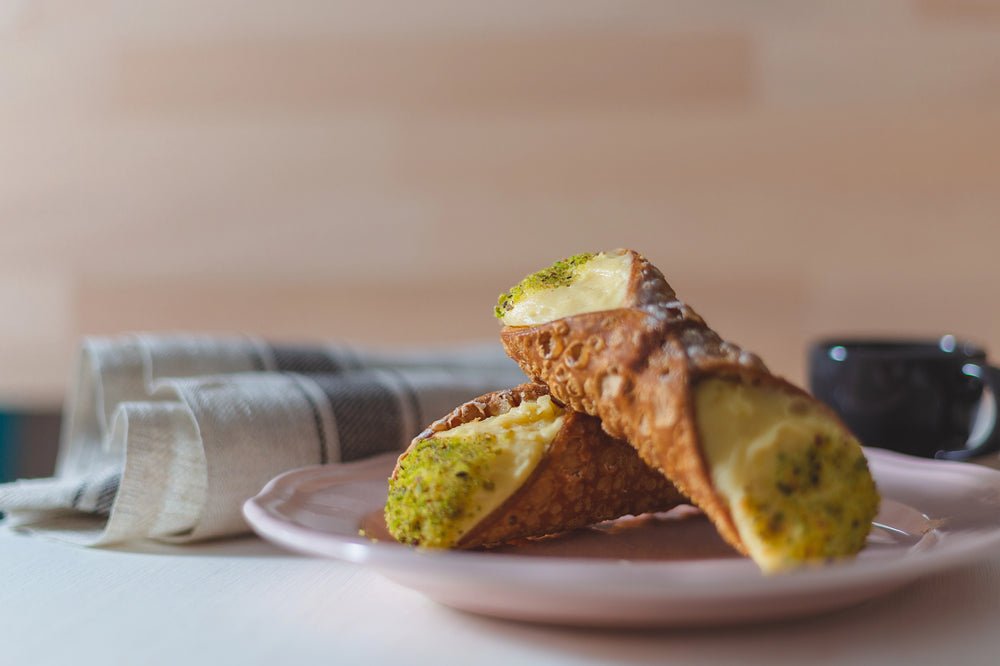
The cannolo shell is a fried pastry wrap, traditionally wrapped around a metal cylinder and then filled with ricotta cream. Its main characteristic is the contrast: the outside must be crunchy, while the filling must be soft and creamy.
The best shells have a slightly irregular surface, with small frying bubbles, a golden-amber colour, and a delicate scent of Marsala, cocoa, and fried pastry. They should not be greasy, soft, or too thick.
Ingredients for Sicilian cannoli shells
To prepare the shells at home, you only need a few ingredients, but they must be worked with precision.
- 250 g of 00 flour
- 30 g of sugar
- 30 g of lard or butter
- 1 egg
- 50 ml of dry Marsala
- 1 teaspoon of bitter cocoa
- 1 pinch of salt
- oil or lard for frying
Marsala helps to scent the dough and contributes to the formation of bubbles during frying. Cocoa is not used to make the shell sweet, but to give it colour and a deeper note.
Sicilian cannoli shells recipe
1. Prepare the dough
Sift the flour and cocoa into a bowl. Add sugar, salt, lard or butter, egg, and Marsala. Knead until you obtain a smooth, compact mixture that is not sticky.
Wrap the dough in cling film and let it rest in the refrigerator for at least one hour. Resting is fundamental as it makes the pastry more elastic and easier to roll out.
2. Roll out the pastry thin
Roll out the dough on a floured surface until it reaches a thickness of about 1–2 mm. A shell that is too thick will be heavy; one that is too thin risks breaking during frying or filling.
3. Shape the shells
Cut out discs or ovals of pastry, wrap them around the appropriate metal cylinders, and seal the edge well with a little egg white or water. The closure must be stable, otherwise the shell will open in the oil.
3. Fry at the right temperature
Fry the shells in hot oil at approximately 170–180°C until they become golden and crunchy. Drain them on absorbent paper and remove the cylinders only when they are cool enough not to break.

How to keep cannoli shells crunchy
The main enemy of the shells is humidity. Even a perfect shell can become soft if it is stored poorly or filled too early.
- Store empty shells in airtight containers in a cool, dry place.
- Fill the shells only immediately before serving to avoid moisture absorption from the ricotta.
- Avoid storing filled cannoli in the refrigerator for long periods.
Discover more Sicilian specialties
If you love traditional flavours, we invite you to explore our other guides to authentic Sicilian pastry and gourmet products.